Campuslife Educative
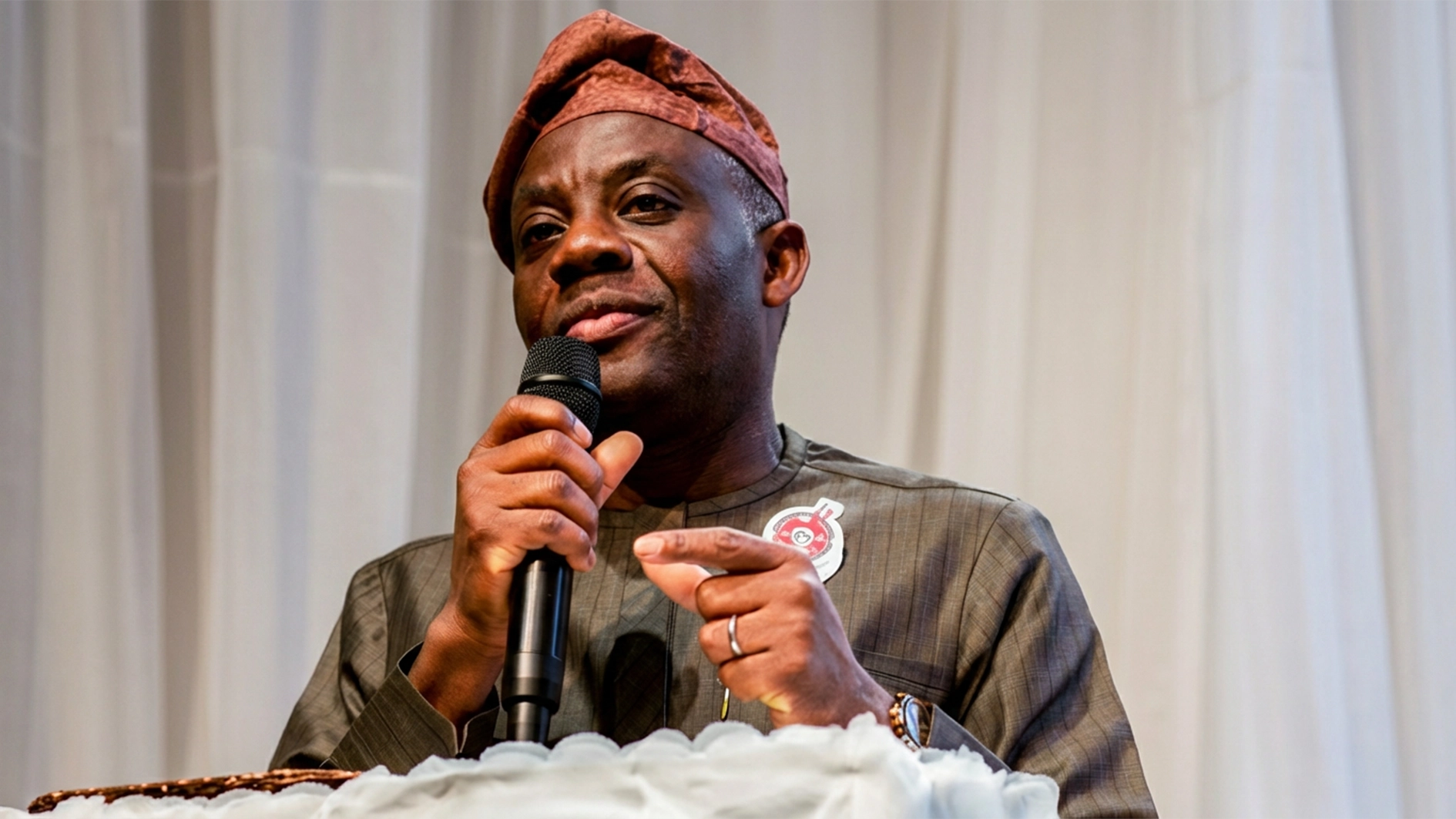
Education Minister, Dr. Tunji Alausa
As the Federal Government intensifies efforts to reform the education sector, experts have called for policy continuity and a stronger emphasis on practical, skills-based learning to ensure lasting impact, OWEDE AGBAJILEKE reports.
In the words of Nelson Mandela: “Education is the most powerful weapon which you can use to change the world.”
It is the foundation upon which countries build prosperity, innovation and social cohesion. A well-educated population drives economic growth, strengthens democratic institutions and promotes tolerance in diverse communities.
In Nigeria, where over 230 million people constitute one of the world’s fastest-growing populations, the state of the education sector has profound implications for national prosperity and stability.
In recent years, deep structural problems in the education system have remained intractable. They include a staggering number of out-of-school children, outdated curricula, weak data systems, and chronic underfunding. Against this backdrop, the imperative for reform is not optional, but existential.
According to the United Nations Educational, Scientific and Cultural Organisation (UNESCO), Nigeria has one of the world’s highest numbers of out-of-school children, with recent estimates placing the figure between 18.3 million and 20 million, representing children of primary and secondary school age.
Prior to October 2024, Nigeria’s education sector was in a sorry state. Public schools across many states grappled with dilapidated infrastructure, overcrowded classrooms, and insufficient teaching materials, creating learning environments that were far from conducive. Also, the Federal Government’s disagreement with the Academic Staff Union of Universities (ASUU) had lingered for a long time, creating serious uncertainty in the sector. The result was a weakened confidence in the system. Institutions struggled with inadequate funding, outdated facilities, and limited research support.
At the basic and secondary levels, concerns over declining learning outcomes, teacher shortages, and uneven policy implementation further deepened the crisis.
Out-of-school children remained a persistent national challenge, reflecting systemic gaps in access and inclusion. Technical and vocational education also received limited attention, leaving many young people without the practical skills needed in a competitive labour market. The sector was burdened by structural inefficiencies, policy inconsistencies, and a trust deficit between stakeholders, underscoring the urgent need for reform and renewed direction.
Concerned by these developments, the Minister of Education, Tunji Alausa, upon assuming office in October 2024, signalled a commitment to stabilising academic calendars, strengthening quality assurance mechanisms and prioritising policies aimed at expanding access, improving infrastructure and restoring confidence in the country’s education system.
While some stakeholders said Nigeria’s education reform agenda has taken a more coherent, data-driven and implementation-focused shape, others argue that the real test lies in sustained execution and measurable impact at the grassroots.
They noted that beyond policy pronouncements and strategic frameworks, success will depend on consistent funding, improved teacher welfare, strengthened monitoring mechanisms, and genuine collaboration between federal and state authorities.
Without continuity and accountability, they warned that even the most well-crafted reforms risk falling short of transforming learning outcomes nationwide.
The minister’s proponents maintained that one of the defining features of his reform drive is the prioritisation of reliable data. Recognising that policy decisions are only as strong as the evidence supporting them, the ministry has intensified efforts to strengthen the Education Management Information System (EMIS).
By improving data collection, verification and integration across federal and state levels, the government aims to eliminate planning blind spots, better track enrollment trends, and allocate resources more efficiently.
Closely linked to this is the renewed assault on the out-of-school crisis. Through expanded partnerships with state governments and development agencies, the ministry has emphasised targeted interventions in high-burden states, especially in northern Nigeria.
Conditional cash transfer models, school feeding collaborations, and community-based learning centres are being repositioned not as ad hoc projects, but as structured pillars within a broader national access strategy.
Curriculum reform has also moved to the forefront. The Alausa-led Ministry of Education has pushed for aligning Nigeria’s basic and secondary school curricula with global competencies, including digital literacy, critical thinking, and vocational skills.
Through a careful review and streamlining of academic content to cut excess and improve relevance, the ministry aims to ensure that graduates emerge not merely with certificates but with the critical thinking skills and practical competence required to thrive in a rapidly evolving labour market.
The Nigerian government also announced a new policy framework to reduce the financial burden on parents, improve learning outcomes, and promote sustainability in schools by adopting reusable, high-quality textbooks.
Pundits said the initiative could significantly curb the recurrent costs families face at the beginning of every academic session, while standardising instructional materials across public schools to ensure equity and quality.
They argued that, beyond cost savings, a structured textbook policy could enhance curriculum delivery, minimise content inconsistencies, and strengthen accountability in procurement and distribution.
In the tertiary education space, the administration of Bola Tinubu has drawn commendation for resolving the protracted standoff with ASUU, a dispute that had disrupted academic calendars for years and eroded confidence in the public university system.
The recurring strikes, often triggered by disagreements over funding, university autonomy and staff welfare, had become emblematic of the systemic fragility of Nigeria’s higher education sector.
Observers noted that resolving the impasse has provided much-needed stability for students, lecturers and university administrators.
For millions of undergraduates whose academic journeys were repeatedly delayed, the restoration of uninterrupted sessions signals renewed predictability and hope. Beyond immediate relief, the resolution is also seen as a foundation for deeper structural reforms, including improved funding frameworks, clearer performance benchmarks, and strengthened dialogue mechanisms between government and university unions to prevent future crises.
The government has also initiated comprehensive reforms to transform the Technical and Vocational Education and Training (TVET) sector into a modern, industry-aligned, and inclusive system.
Key reforms include free education (tuition, accommodation, and feeding) in all Federal Technical Colleges, alongside a N22,500 monthly stipend for students to boost enrolment, introduction of a new 90 per cent practical curriculum, retraining of over 3,600 instructors, and the launch of a digital skills accelerator to train five million youths by 2030.
In an interview with The Guardian, the President of the UNESCO Read and Earn Federation, Abdulsalami Ladigbolu-Oranmiyan, supported the Federal Government’s textbook reuse initiative, describing it as a timely reform that addresses both affordability and sustainability in Nigeria’s school system.
Ladigbolu-Oranmiyan said the initiative resonates deeply with years of personal intervention through the Book Bank Campaign (BBC), a grassroots programme that collects used books and redistributes them to students facing financial constraints.
The government’s structured adoption of reusable, high-quality textbooks, he added, will significantly reduce economic pressure on families, particularly at the start of each academic session, when the cost of learning materials often spikes.
He, however, stressed that deeper, structural reforms are urgently required. According to him, Nigeria’s current education system remains heavily skewed toward rote and retentive memory learning, producing graduates trained primarily to recall information rather than individuals equipped with creativity, adaptability and problem-solving skills.
He argued that a meaningful transformation of the sector must go beyond surface-level adjustments and interrogate the philosophical foundations of education in the country.
“The major area we must focus on is a complete overhaul of the education system itself. At present, our system is heavily tilted toward retentive memory learning, which produces a workforce trained to recall information rather than resourceful individuals capable of innovation and problem-solving.
“If education is truly the backbone of societal development, then we must also interrogate the background of education itself, its philosophy, its delivery, and its relevance to modern challenges.
“Until we address this foundational issue, which develops the background of education itself, we risk continuing to polish an obsolete system rather than building one that nurtures creativity, critical thinking, and innovation. The future of our society depends not just on expanding access to education, but on transforming education into a tool that produces thinkers, innovators, and leaders who can drive real development.”
Also, the National President of the Parents-Teachers Association of Nigeria (PTA), Prof. Boniface Odeh, expressed concern about the frequent policy inconsistencies observed under successive education ministers. He emphasised that the lack of continuity in educational policies has often disrupted the implementation of long-term programmes, created uncertainty for schools and parents, and hindered the overall progress of the country’s education system.
Odeh stressed that a more stable and coherent policy approach is essential to ensure sustainable development and meaningful reforms in the sector.
The don, who doubles as Provost of the Benue State College of Education, lamented that while the Education Minister earned praise for addressing parents’ concerns by raising university admission age to 16 years, there is a risk that a future minister might undo this policy.
“It’s from one minister to another that are changing the policies as they deem fit. The former minister was defiant and left it at 18, this minister came and took it to 16. Another Minister would come and take it to 20,” he told The Guardian.
The PTA President also criticised the move to introduce computer-based testing for the Senior School Certificate Examinations by the West African Examination Council (WAEC) and National Examination Council (NECO), describing it as premature and akin to putting the cart before the horse.
“There are secondary schools that don’t have up to 10 computers. There are several students in the rural areas who have not seen computers in their lives,” he added.
Similarly, Prof. Edem Eniang supports the Federal Government’s textbook policy. He described it as a timely and necessary intervention aimed at reducing the financial burden on parents and promoting equity in access to learning materials.
The Professor of Biodiversity Conservation noted that beyond its economic benefits, the policy also carries significant environmental implications.
He explained that textbooks are produced from paper derived from trees, and in an era marked by climate change and environmental degradation, reducing the frequency of textbook replacement is both prudent and responsible.
Promoting the reuse of books across student cohorts, he explained, aligns with global sustainability goals and reinforces the conservation culture schools should teach.
Eniang further argued that encouraging students to inherit books from older peers not only saves families costs but also instils in children a sense of value for shared resources.
He warned that the practice of constantly introducing new editions and compelling parents to purchase fresh copies undermines the spirit of public education and places undue pressure on low-income households.
He, therefore, urged the government to ensure strict monitoring and enforcement of the textbook policy, stressing that its success would depend on transparency, accountability, and the cooperation of school administrators, teachers, and publishers.
He also called for improved motivation and welfare for teachers, stressing that no meaningful reform in the education sector can succeed without a committed and inspired teaching workforce.
According to him, teachers remain the backbone of the system, and their productivity is directly tied to how well they are supported, remunerated and equipped.
He urged the government at all levels to prioritise better salaries, timely payment of entitlements, opportunities for professional development and improved working conditions. He stated that when teachers feel valued and secure, they are more likely to deliver quality instruction, mentor students effectively, and embrace policy reforms with enthusiasm.